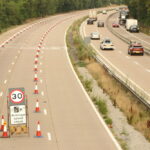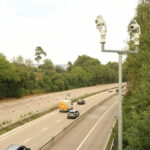
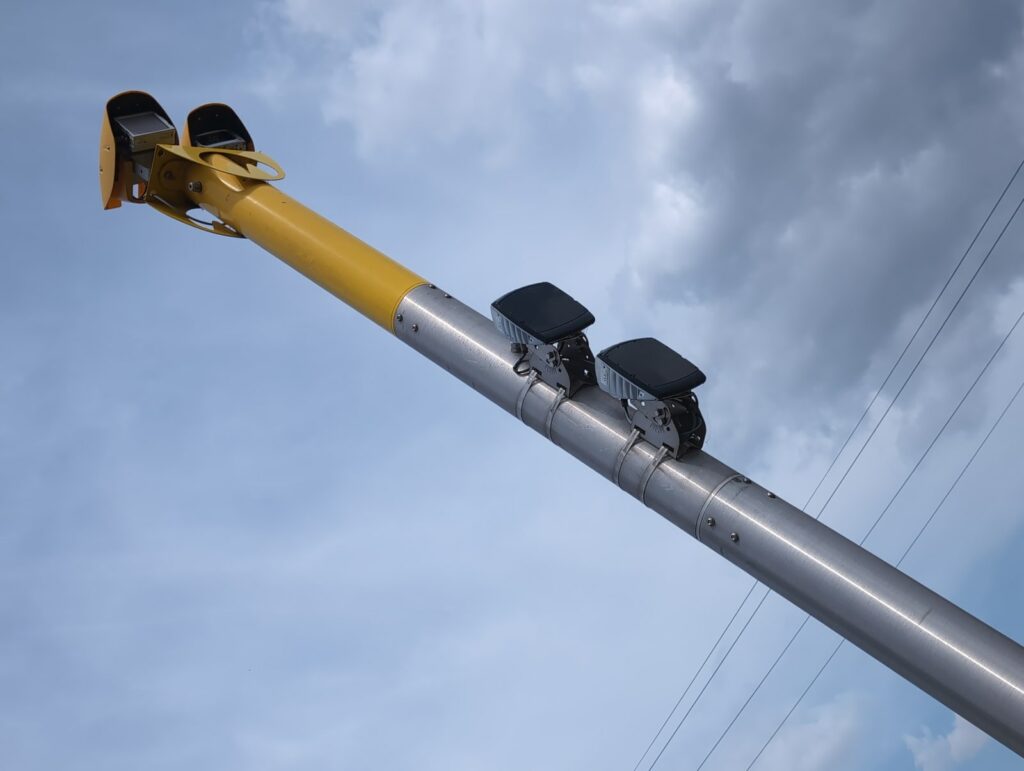

- The Government’s national noise camera trial ran from October 2022 to February 2023 in four locations — and the cameras triggered 1,777 times.
- An independent report found just 4% of those activations were down to genuinely noisy vehicles.
- The official conclusion? The cameras work, and live enforcement is the next step — with fines, licence points and even vehicle seizure on the table.
Between October 2022 and February 2023, the Government pointed a new kind of camera at British Drivers in Keighley, Bristol, Great Yarmouth and Rubery in Birmingham.
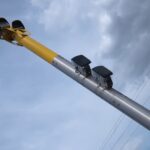
Not a speed camera, but a “noise camera” — a microphone array bolted to number plate recognition, listening to every vehicle that passes and photographing the ones it decides are too loud.
Over those months the cameras triggered 1,777 times. And when the independent report landed, it revealed just four per cent of those activations were attributable to excessively noisy vehicles.
Ninety-six times out of a hundred, the camera flagged something else entirely — emergency vehicles among them.
So the project was quietly shelved, you’d assume. You’d assume wrong.
Six Years in the Making
The idea goes back to 2019, when then-Transport Secretary Chris Grayling announced trials of cameras that would work like speed cameras but for sound, declaring that noise pollution “makes the lives of people in communities across Britain an absolute misery”.
Kensington and Chelsea got there first, becoming the first UK borough to trial the technology in 2020. In three months it issued 163 fines of £100 each, plus 69 warnings — out of nearly 2,000 camera activations. The noisiest catch on record, according to figures reported by The Times, was a Lamborghini measured at 112.9 decibels: louder than sustained levels linked to hearing loss.
Nobody disputes that a supercar being revved down a residential street at midnight is antisocial. The RAC found 58 per cent of Drivers surveyed actually favoured the cameras.
But the question was never whether noisy exhausts are annoying. It’s whether this technology can reliably tell the guilty from the innocent — and the Government’s own trial answered that.
96% False Alarms — and Full Steam Ahead
Here’s where it gets interesting. The report produced for the Department for Transport concluded that the cameras operate effectively at the roadside, and that the next step for the project is a live enforcement date.
A system that flagged the wrong thing 96 times in every hundred has been judged ready to move towards issuing real penalties.
And the penalties being floated are not trivial: fines starting at £100, potential driving licence points, and even vehicle seizure under the Police Reform Act 2002. The report also suggested lowering the trigger threshold to 85 decibels for the next phase — meaning the net would be cast wider, not narrower.
There was one more finding buried in the report: the system becomes cost-neutral at just two genuine activations per day. In other words, the cameras don’t need to catch many people to pay for themselves — and history suggests enforcement technology that pays for itself tends to multiply.
The Pattern Every Driver Should Recognise
Step back and the noise camera is simply the newest recruit to a familiar model: an automated device at the roadside, number plate recognition, a penalty generated without a human officer in sight, and a Driver who first learns about any of it when an envelope lands on the doormat.
Speed cameras pioneered it. Bus lane cameras, box junction cameras and LTN cameras industrialised it. Noise cameras would extend it to something as subjective as sound — using technology whose own trial data shows how often it gets things wrong.
Don’t miss a story: join the free DriveProtect newsletter — straight-talking updates for British Motorists.
When the Envelope Arrives
The lesson from every camera-led enforcement scheme is the same: the machine starts the case, but the paperwork has to finish it. Automated systems make mistakes — the noise camera trial proves it in black and white — and the penalties they generate are only as solid as the evidence and procedure behind them.
That’s true of a noise camera flash, and it’s every bit as true of the speed camera NIP that’s more likely than ever to reach your doormat.
DriveProtect™ Members never have to work out alone whether a case against them stacks up. The moment a NIP arrives, Members get direct access to a specialist Speeding Solicitor who reviews the case and advises them exactly what to respond, for a fraction of the normal cost of legal help.
The war on the British Motorist, straight to your inbox
Join the free newsletter — straight-talking updates on speed cameras, enforcement, and your rights as a Driver.
Join the NewsletterGot a NIP or points on your licence right now? See how DriveProtect Membership works — a specialist Speeding Solicitor in your corner from £25/month.