
- UK police forces now fly around 60,000 drone missions a year — and drones are formally part of road traffic enforcement.
- Devon and Cornwall’s drones can spot a vehicle from roughly four miles away, then direct a patrol car to stop it.
- And the newest generation doesn’t even need a pilot standing at the roadside.
Back in 2019, we reported something that sounded like tabloid hype: the Metropolitan Police were testing a military-grade surveillance drone as a speed camera in the sky.
It was an Aeryon drone — hardware designed for war zones and disaster response, costing around £83,000 — with night vision and the ability to track a target vehicle’s speed. The Met flew it over London for five days in July 2019, targeting dangerous Drivers on high-casualty routes like the A10 near Enfield, which had seen eight deaths in the previous two years.
At the time, we asked whether it was paranoid to think drones would one day be routinely watching British Motorists.
The years since have answered that question.
From One Experiment to 60,000 Flights a Year
UK police forces now fly around 60,000 drone missions a year, according to the National Police Chiefs’ Council — and the technology has moved from novelty to standard kit.
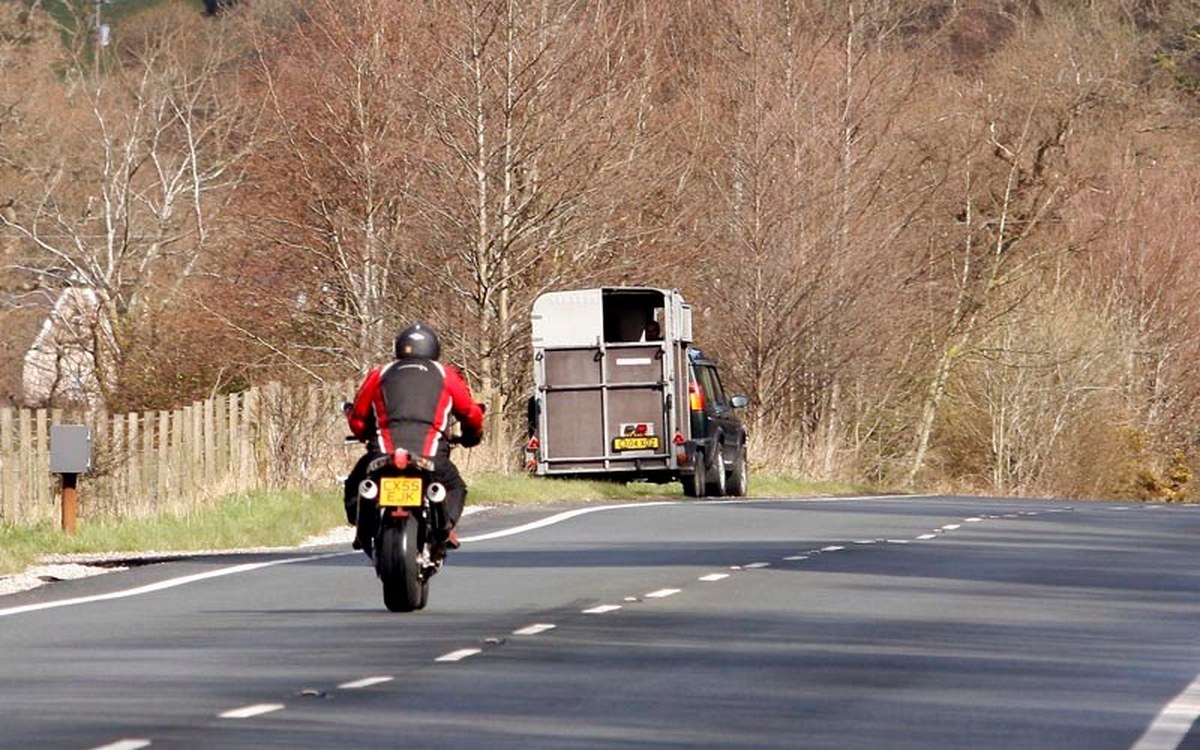
The decisive step for Drivers came in 2023, when Devon and Cornwall Police became the first force in the country to use drones specifically to monitor driving. Their machines watch what the force calls high-harm routes, spotting vehicles from roughly four miles away and radioing ahead so a patrol car can stop the Driver further up the road.
Officers then play the footage back to the Motorist at the roadside. As one sergeant put it, “the camera doesn’t lie”.
The force was open about where this goes next: the technology will be used to help detect speeding and dangerous driving in all vehicles, not just the motorbikes it started with.
READ MORE: Noise Cameras Triggered 1,777 Times in the Government Trial — Only 4% Were Actually Noisy Vehicles
The Drone That Launches Itself
The 2019 experiment needed a trained pilot and an £83,000 aircraft. The newest generation needs neither.
In October 2025, the Met launched its Drone as First Responder programme — drones that sit in an automated dock on the roof of Islington police station and launch themselves to incidents in under 90 seconds, streaming live footage to officers before anyone arrives.
It’s part of a national programme led by the National Police Chiefs’ Council, and it is spreading fast: by 2026, forces including Cleveland and the West Midlands were flying dock-launched drones of their own, some piloted remotely from a control room in a different city.
For now these drones respond to emergencies rather than patrol for speeders. But the infrastructure — automated launch, remote pilots, live tracking of vehicles — is precisely what aerial traffic enforcement would need.
We saw this pattern before. Essex Police experimented with helicopters as speed cameras on the A13 and A127 around 2009 and quietly gave up, because helicopters cost a fortune to fly. Drones removed that obstacle entirely, and the flight numbers show what happens when enforcement gets cheap.
Don’t miss a story: join the free DriveProtect newsletter — straight-talking updates for British Motorists.
What a Drone Case Means for You
A drone prosecution is not a speed camera prosecution. There’s no calibrated, type-approved device sitting on a pole — there’s footage, shot from the air, interpreted by an officer, and a roadside stop that follows.
That evidence still has to stand up. How the speed was assessed, whether the vehicle identified is genuinely yours, whether procedure was followed at the stop and in the paperwork that follows — every link in that chain can be examined, and aerial footage judging speed and distance is a long way from self-proving.
Most Drivers never think to question any of it. They see video evidence and assume the case is closed, which is exactly the assumption that loses winnable cases.
DriveProtect™ Members don’t have to guess. Whether the NIP came from a camera, an officer, or something hovering four miles away, Members get direct access to a specialist Speeding Solicitor who reviews the case and advises them exactly what to respond, for a fraction of the normal cost of legal help.
The war on the British Motorist, straight to your inbox
Join the free newsletter — straight-talking updates on speed cameras, enforcement, and your rights as a Driver.
Got a NIP or points on your licence right now? See how DriveProtect Membership works — a specialist Speeding Solicitor in your corner from £25/month.