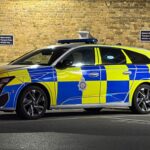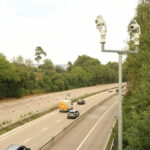
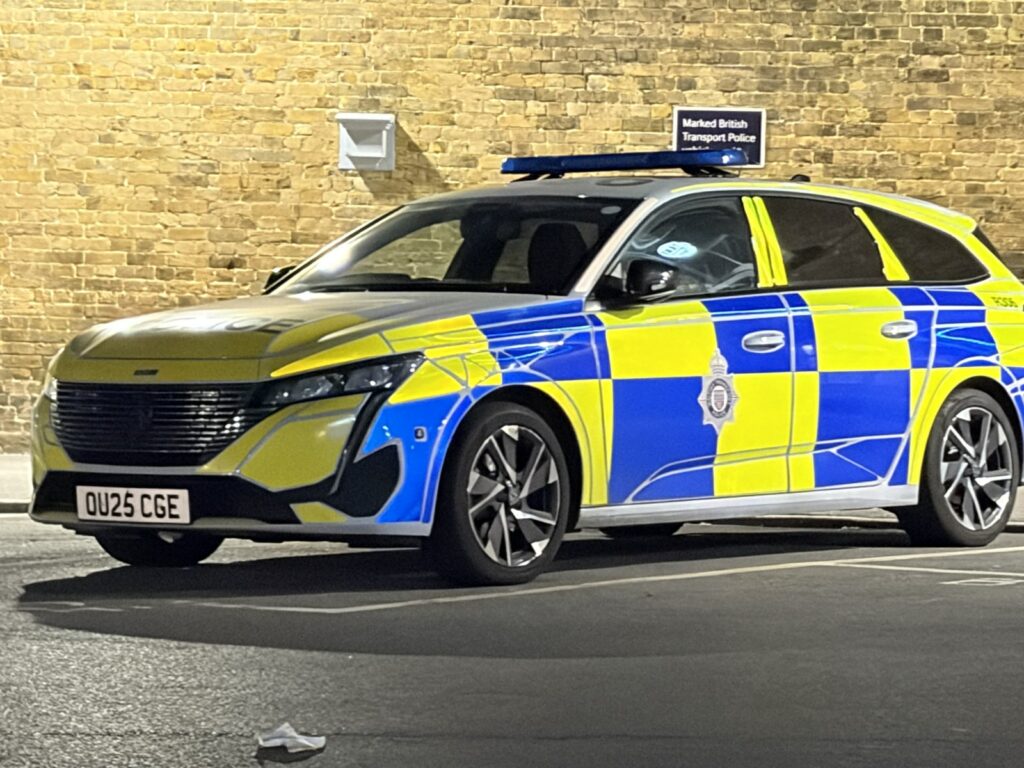

- Under section 163 of the Road Traffic Act 1988, police can stop any vehicle without giving any reason at all — entirely at random, entirely lawfully.
- Refuse to pull over and you commit a criminal offence carrying a fine of up to £1,000.
- But what officers can do once you’ve stopped is another matter — and that’s where your rights begin.
Some years back, our founder drove the 25 miles from a meeting in Kent to another in Croydon — and counted nine Drivers pulled over at the roadside along the way.
Nine stops, in half an hour, on one stretch of road. The police were clearly running a spot-check operation: tyres, tax, documents, the usual.
The finishing touch came at a petrol station on the M23, where a police poster complained that forgetful Drivers “waste valuable police time” — displayed within sight of two Motorists being checked at the pumps.
It raises the question almost every Driver asks eventually: can they really just pull you over for nothing?
The answer is yes. And knowing exactly where that power starts and stops could one day matter a great deal to your licence.
The Power With Almost No Small Print
Section 163 of the Road Traffic Act 1988 says a person driving a motor vehicle on a road must stop when required to do so by a constable in uniform.
That’s the whole test. No suspicion needed, no offence needed, no explanation owed. The Courts have long accepted that an officer can stop cars completely at random — every third car, every red car — and the stop is still lawful.
Fail to stop when required and you’ve committed an offence in its own right, with a fine of up to £1,000.
So at the roadside, the argument “you had no reason to stop me” gets a Driver precisely nowhere. But that’s only half the picture.
What They Can Ask For Once You’ve Stopped
After a lawful stop, the law hands officers a specific shopping list — and it’s shorter than most Drivers imagine.
Under sections 164 and 165 of the same Act, an officer can require your name and address, the vehicle owner’s details, and production of your driving licence, insurance certificate and MOT certificate where one is required.
Don’t carry your documents? That’s not an offence on the spot. You’ll be handed an HORT/1 — the famous “producer” — giving you seven days to present them at a police station of your choosing.
They can also look the vehicle over, and if it appears dangerously defective, act on that. What they cannot do is treat the stop as an open licence to go through you and your car.
Where the Power Runs Out
Three limits are worth knowing.
First, a stop is not a search. There is no automatic power to search your vehicle just because it was stopped — a search needs reasonable grounds under section 1 of the Police and Criminal Evidence Act 1984, such as genuine suspicion of stolen or prohibited items.
Second, the section 163 power belongs to a constable in uniform, on a road. An officer in plain clothes cannot require you to stop under it, even from a marked car — and a “road” is a defined legal term that some private land and car parks may fall outside.
Third, the Courts have held — as far back as R v Waterfield in 1963 — that the power must be used for a proper policing purpose. Random is lawful; improper is not.
None of this makes a roadside stop a battle to be won. But it does mean the encounter has rules on both sides.
Don’t miss a story: join the free DriveProtect newsletter — straight-talking updates for British Motorists.
Play the Roadside Smart — and the Paperwork Smarter
Our advice to Members has never changed: at the roadside, be calm, be polite, comply with the lawful requests. Nothing good ever came from arguing section numbers through a car window, and plenty of avoidable tickets have.
The place to contest what happened is afterwards, on paper — where the rules above actually bite. If a stop turns into a ticket, a summons or a NIP, everything becomes checkable: the basis for any search, the accuracy of any allegation, the validity of every document served on you.
That’s the moment for a specialist, not a stand-off.
DriveProtect™ Members have one on call. If a stop ever turns into points, a NIP or a Court date, Members get direct access to a specialist Speeding Solicitor who reviews the case and advises them exactly what to respond, for a fraction of the normal cost of legal help.
The war on the British Motorist, straight to your inbox
Join the free newsletter — straight-talking updates on speed cameras, enforcement, and your rights as a Driver.
Join the NewsletterGot a NIP or points on your licence right now? See how DriveProtect Membership works — a specialist Speeding Solicitor in your corner from £25/month.