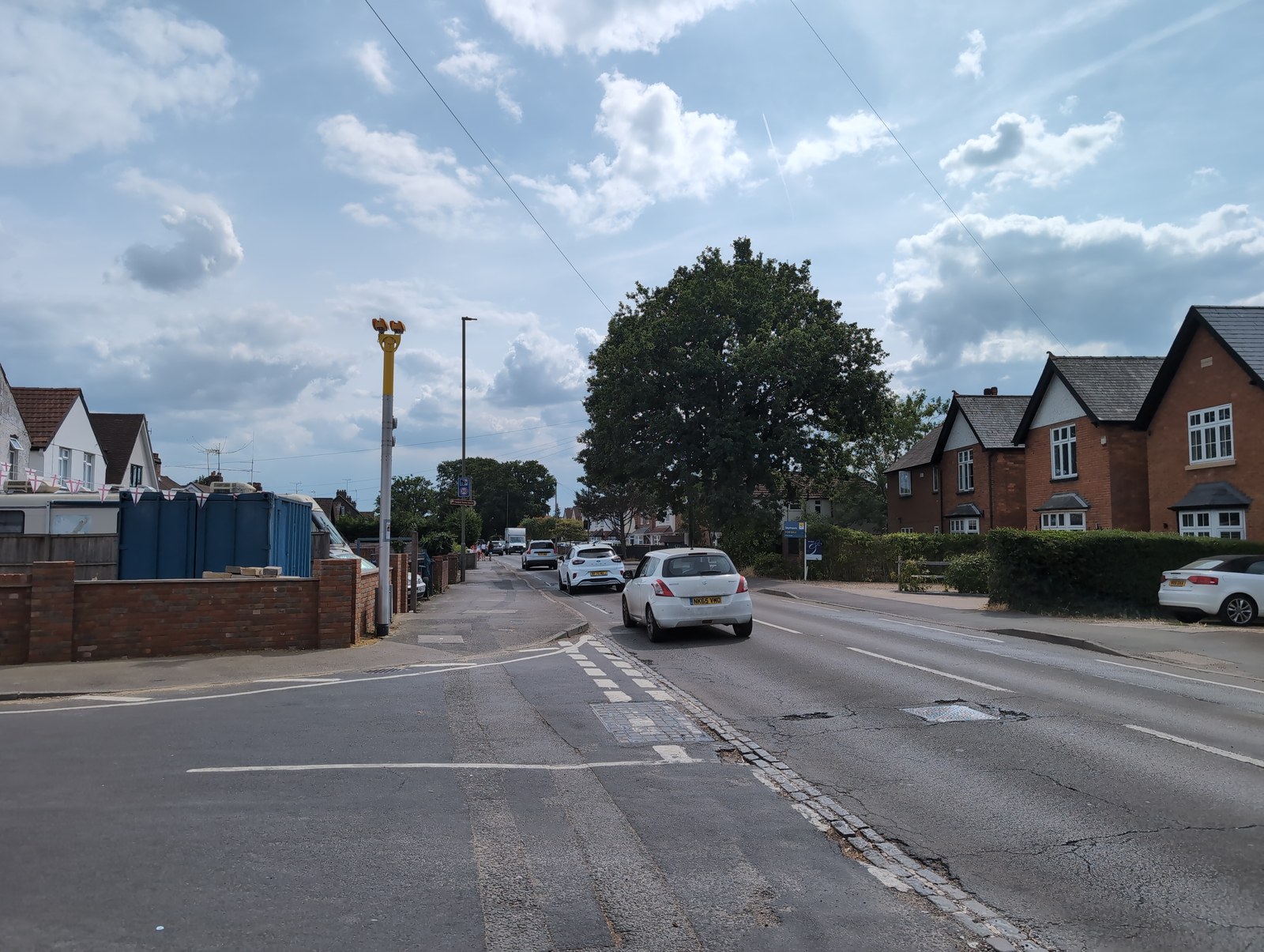

- There is no law requiring UK speed cameras to be painted yellow — the famous yellow convention comes from Home Office guidance, not statute.
- When small grey cameras appeared on the M25 in 2014, 668 Drivers were caught in just over two months on a single stretch.
- And the one defence most Motorists think they have — “I couldn’t see it” — turns out to be worth nothing at all.
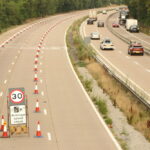
Years ago, back in our earliest days watching the speed camera industry, our founder was driving home from a day out at Epping Forest when something odd caught his eye on the M25.
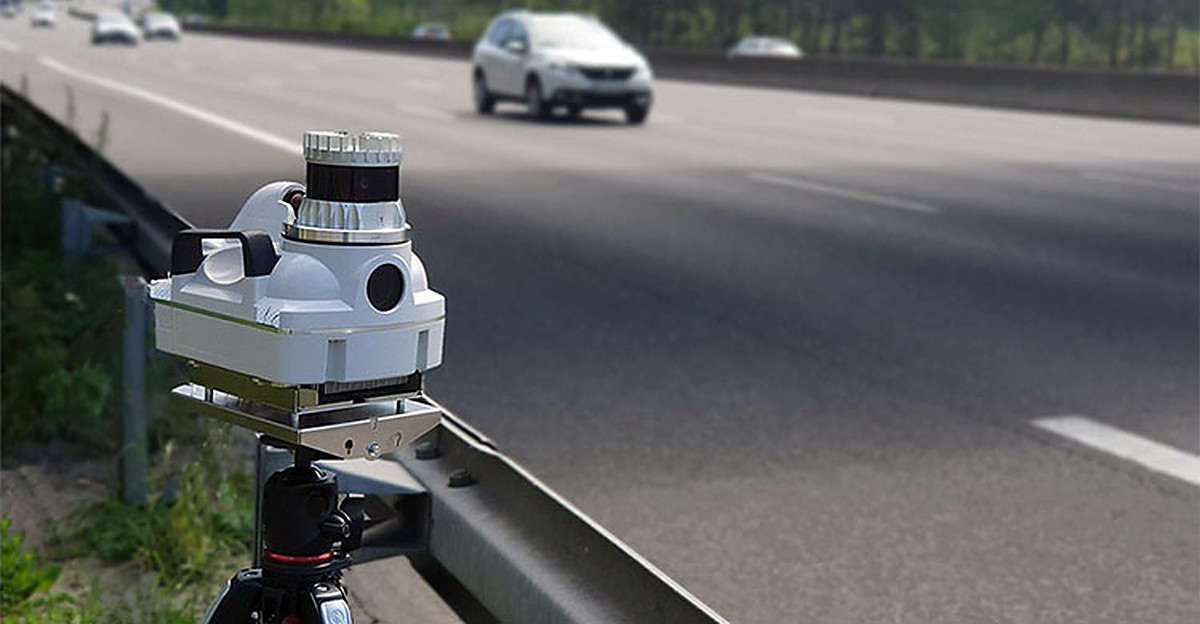
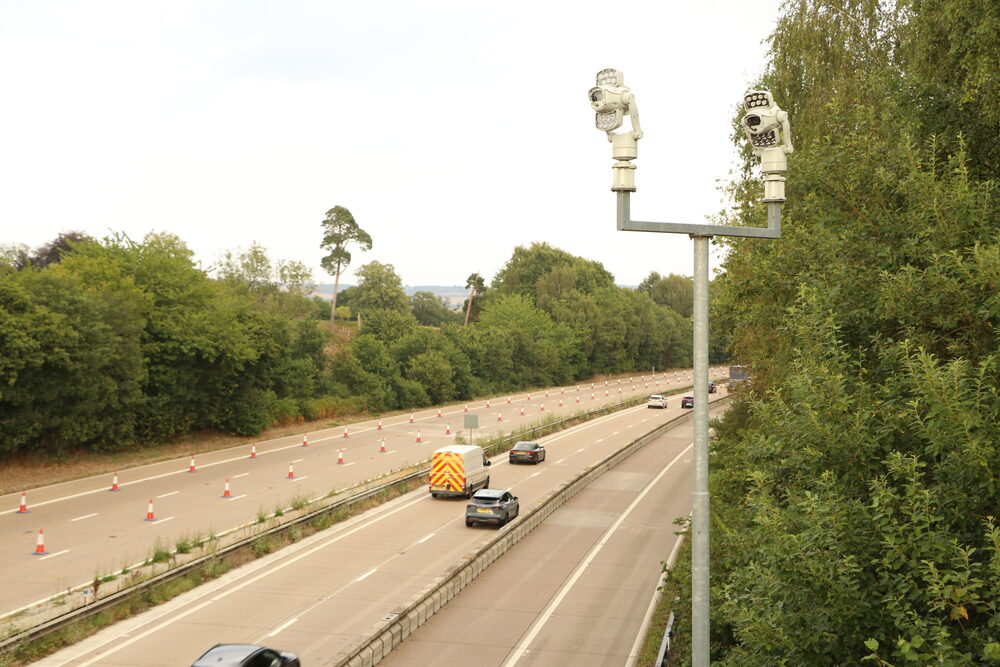
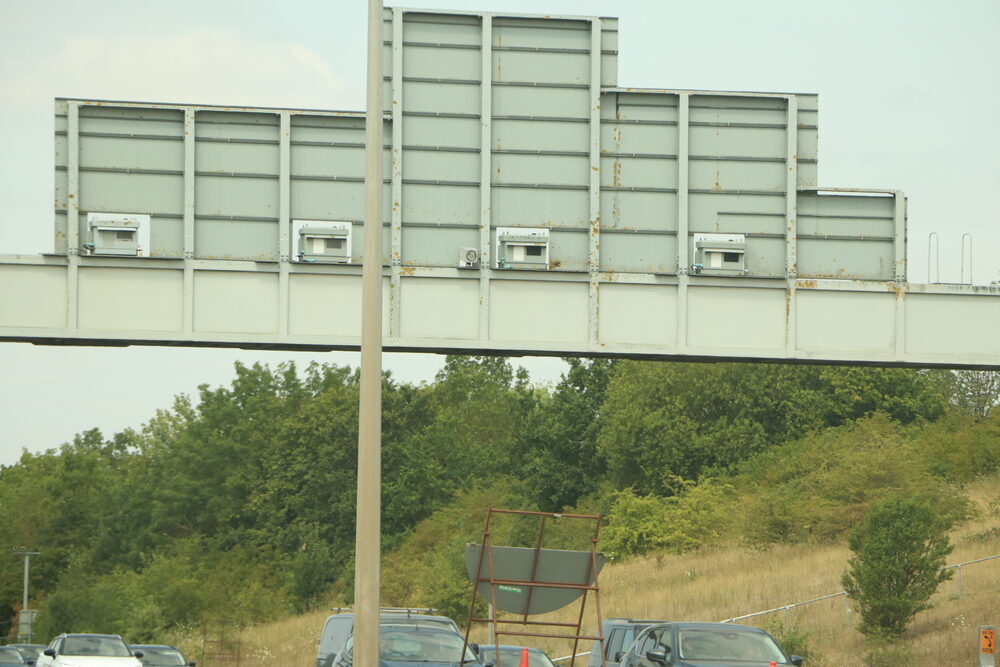
The two sets of SPECS average speed cameras between the A12 and M11 junctions had been fitted with grey covers.
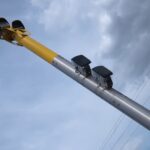
Parts of each unit were still yellow. The poles were still yellow. But the camera housings themselves had gone the old “speed camera grey” of the 1990s — the colour from the era when cameras were built not to be seen.
Had somebody at the factory run out of paint? Or was bright yellow quietly on the way out?
The answer turned out to be stranger than either. Because the big secret about speed camera colour is this: there is no law that says a speed camera has to be yellow at all.
The Colour Rule That Isn’t a Rule
Ask most Drivers and they’ll tell you with complete confidence: cameras must be yellow, and a grey one can’t touch you.
It’s a myth.
The yellow housing convention comes from Home Office guidance — advice intended to make cameras visible so they deter speeding rather than simply harvest it. Guidance is not statute, and no Court has ever needed a camera to be yellow for a conviction to stand.
The government did order a clean-up. After a review in 2015, Highways England pledged that every working speed camera on the strategic road network — the motorways and major A-roads — would be painted yellow by October 2016.
But a pledge for one network is not a law for every road. And by the time that promise was made, grey cameras had already shown exactly what they could do.
The Stealth Camera Era Proved the Point
In 2014, a new kind of camera began appearing on smart motorways: the HADECS 3 — a compact grey unit tucked onto gantries and roadside poles, enforcing variable speed limits across up to five lanes at once.
Drivers couldn’t see them. The press promptly christened them “stealth cameras”.
The results were immediate. After the first units went live between junctions 5 and 6 of the M25, Kent Police logged 668 speeding offences in just over two months — on one stretch of one motorway.
And that was only the warm-up. Police figures reported in 2016 showed 52,516 fixed penalties issued in a single year across 11 smart motorway sections. Before those same stretches were upgraded, in 2010-11, the figure was 2,023.
Every one of those tickets was issued by cameras many Drivers swear were “too hard to see to count”. All of them counted.
Grey Is Still Out There — By Design
Even today, with the yellow pledge long delivered, grey enforcement is alive and well.
HADECS units on smart motorways remain largely grey, mounted overhead or at the roadside where many Drivers only spot them in the mirror. Perfectly lawful.
And in some of Britain’s most scenic corners, blending in is the actual design brief. Council planning documents show grey average speed camera columns deliberately chosen for National Parks including the Trossachs and the Cairngorms, and in Cumbria — with officials openly noting the reduced visibility compared to standard yellow.
So those grey covers our founder spotted on the M25 all those years ago? Whatever the explanation — refurbishment, maintenance, or a genuine paint shortage — they were a preview of an uncomfortable truth for every Motorist.
Yellow is a courtesy, not a right. And a courtesy can be withdrawn.
Don’t miss a story: join the free DriveProtect newsletter — straight-talking updates for British Motorists.
“I Couldn’t See It” Is No Defence — But You May Still Have One
Here’s the part that matters when the envelope lands on your doormat: not seeing the camera — because it was grey, hidden, or behind you on a gantry — does not invalidate the ticket. That argument fails every time.
But that doesn’t mean the case against you is automatically sound.
The prosecution still has to get everything else right. The NIP must be served correctly and on time. The details on it must be accurate. The speed limit itself — not the camera — must be lawfully signed. The device must be type-approved and properly operated.
Those are the questions that decide cases, and they’re almost impossible to assess on your own from a kitchen table.
DriveProtect™ Members don’t have to. The moment a NIP arrives — from a yellow camera, a grey one, or one they never saw at all — Members get direct access to a specialist Speeding Solicitor who reviews the case and advises them exactly what to respond, for a fraction of the normal cost of legal help.
The war on the British Motorist, straight to your inbox
Join the free newsletter — straight-talking updates on speed cameras, enforcement, and your rights as a Driver.
Join the NewsletterGot a NIP or points on your licence right now? See how DriveProtect Membership works — a specialist Speeding Solicitor in your corner from £25/month.