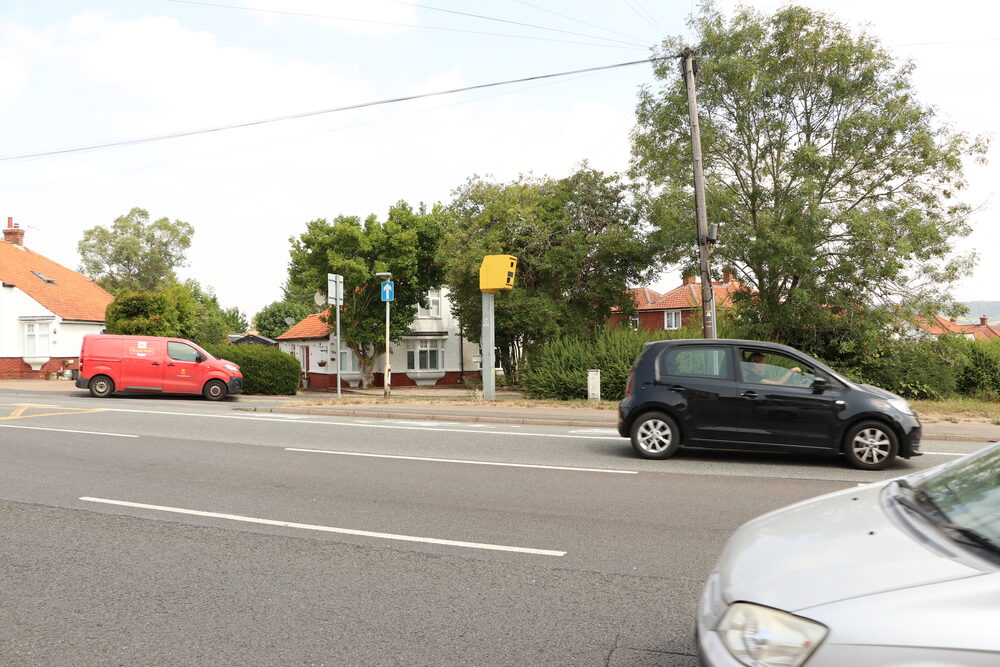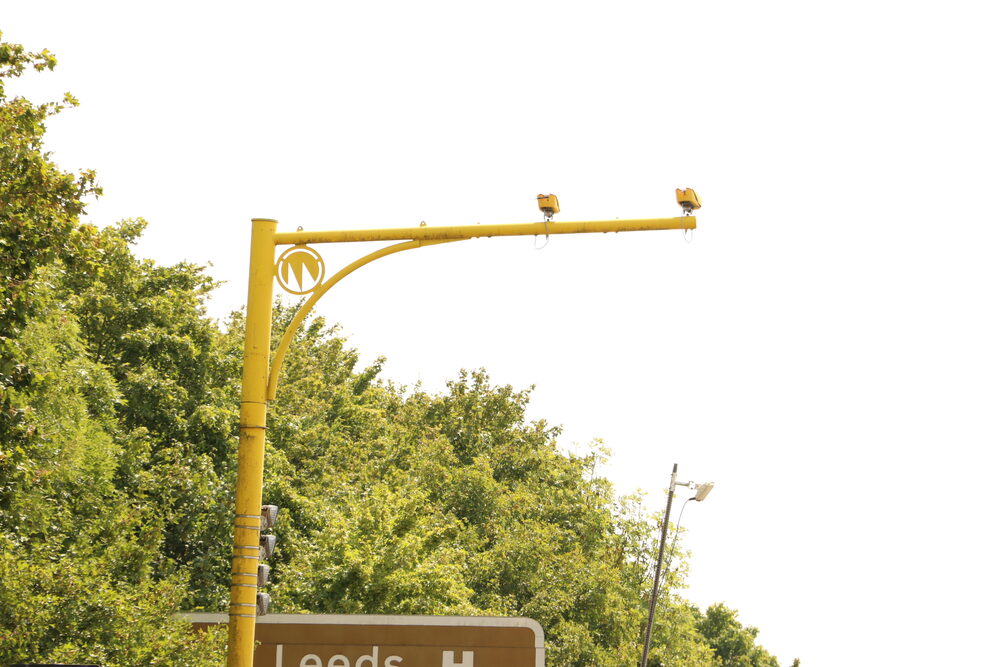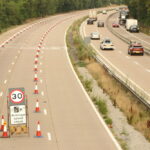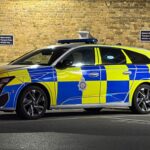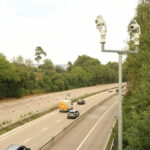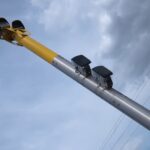
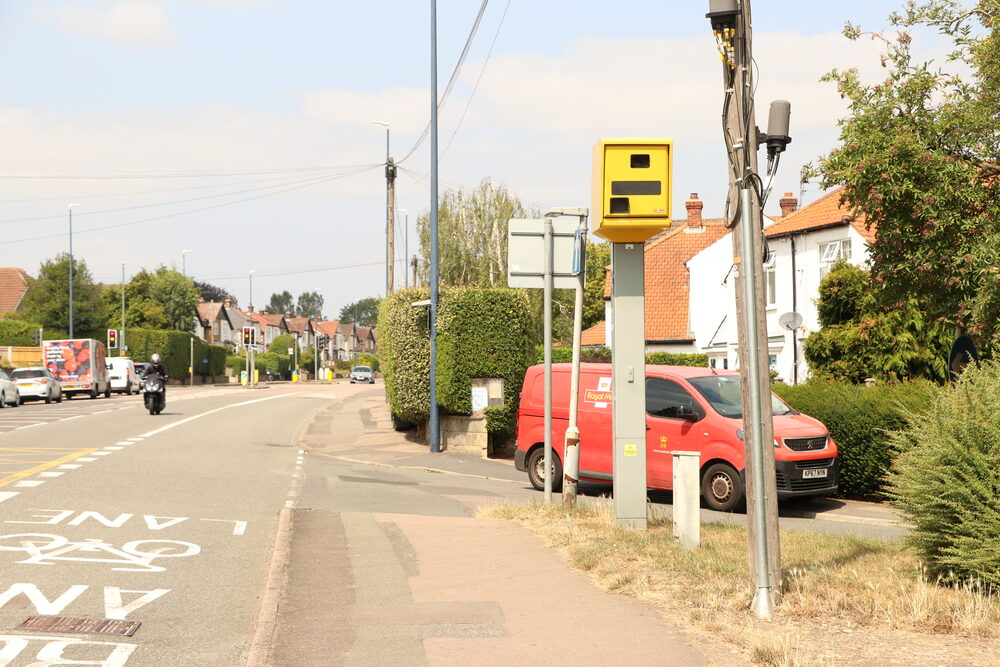

- There is no law requiring speed enforcement officers — or camera vans — to be visible. They can stand behind signs, hedges and bridges, and they do.
- There’s no legal requirement for warning signs at an enforcement site either, and the famous “10 per cent plus 2” allowance is guidance, not law.
- But before you despair: the things that actually get speeding cases challenged have nothing to do with where the officer was standing.
One of our Members, Dave, was driving through Liverpool when he passed a police officer he never saw.
The officer wasn’t in a marked van on a verge, and he wasn’t at a well-known enforcement site. He was on the pavement, tucked in behind a cluster of road signs — positioned, Dave’s dashcam later showed, at the exact point where the speed limit dropped from 40mph to 30mph.
Dave went through at 41mph. A few days later, the paperwork arrived.
When he reviewed his own footage, what struck him wasn’t his speed. It was the positioning: an officer screened by street furniture, aiming a speed gun at the precise boundary where every passing Driver was still travelling at the old limit.
Your first reaction is probably the same as his: surely that can’t be allowed?
The Uncomfortable Truth: Hiding Is Legal
Here’s the part most Drivers genuinely don’t know. There is no law — none — requiring a speed enforcement officer to be visible to the traffic they’re checking.
Police forces say so themselves. The Police Service of Northern Ireland publishes a myth-busting page confirming there are no laws about visibility, and a Go Safe casualty reduction officer in Wales put it plainly in an interview: legally, they don’t have to be seen, and camouflage would be entirely within the rules.
The same applies to warning signs. Those “camera enforcement” signs you look out for are a courtesy, not a legal requirement. An enforcement site needs no signage at all.
And that famous rule of thumb — 10 per cent plus 2mph before they’ll prosecute? Guidance. Individual forces and officers can and do act below it, which is why a reading of 41mph in what has just become a 30 zone is enough to start a prosecution.
What makes Dave’s case sting is that the tactic is aimed at the one place Drivers are most exposed: the changeover point, where a road you’ve correctly been driving at 40mph becomes a 30 — and your speed takes a few seconds to follow.
Fair Play Is Policy, Not Law
There is a wrinkle worth knowing. Official guidance over the years — including from the Department for Transport — has said enforcement should generally be visible, which is why fixed cameras are painted bright yellow and most vans are liveried. Forces themselves argue that visibility is the deterrent, and that deterrence is the point.
So when an officer conceals himself behind signage at a limit boundary, he isn’t breaking the law. He’s departing from the spirit that the yellow paint was supposed to represent — and the gap between those two things is where thousands of tickets are written every year.
You cannot fight a ticket by pointing at that gap. “He was hiding” has never got a case dismissed.
What does get cases challenged is something else entirely.
Don’t miss a story: join the free DriveProtect newsletter — straight-talking updates for British Motorists.
Where These Cases Are Actually Won
Strip out the outrage and a case like Dave’s has several genuine lines of attack — none of them about where the officer stood.
First, the paperwork. A NIP must be served correctly and, for the registered keeper, within 14 days. Errors in the date, location or vehicle details can go to the heart of whether a prosecution is valid.
Second, the reading itself. Speed detection devices must be Home Office type approved, properly calibrated, and used by a trained operator in accordance with the rules for that device. A handheld gun aimed through street furniture at a boundary point is precisely the kind of reading a specialist wants to examine.
Third — and most relevant at a limit change — the road. Was the 30mph limit itself lawfully signed at that boundary? If the terminal signs marking the change don’t meet the legal requirements, the limit can be unenforceable at the very spot the officer chose to stand.
None of this is a loophole. It’s simply holding the prosecution to the same standards it holds you to — and it’s the part almost no unrepresented Driver ever checks.
What To Do If It Happens To You
If a ticket arrives from an enforcement site you never saw, don’t waste energy on whether the officer played fair. The law says he doesn’t have to.
Put your energy where it counts: getting a specialist eye on the NIP, the device, and the signage, before you respond to anything.
That’s exactly what DriveProtect™ Members do. From the moment a NIP arrives, Members get direct access to a specialist Speeding Solicitor who reviews the case and advises them exactly what to respond, for a fraction of the normal cost of legal help.
The war on the British Motorist, straight to your inbox
Join the free newsletter — straight-talking updates on speed cameras, enforcement, and your rights as a Driver.
Join the NewsletterGot a NIP or points on your licence right now? See how DriveProtect Membership works — a specialist Speeding Solicitor in your corner from £25/month.