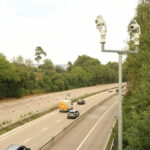


- Darrel Chapman was clocked speeding five times in 14 minutes on a single stretch of road he believed was a 40mph zone.
- He faced up to 15 penalty points — an instant ban — but left Court with six points and a £465 fine.
- The argument that saved his licence is one most Drivers have never heard of, and it works even when you’re guilty.
Back in 2022, Darrel Chapman drove to a friend’s house in Plymouth to drop something off. The journey took a quarter of an hour.
In that quarter of an hour, he was caught speeding five times.
The first ticket landed on his doormat a few days later. He kicked himself and put it down to a silly mistake. Then another arrived, and another, until he was holding five separate speeding tickets from one short drive along Elburton Road — the first camera triggered at 8.55pm, the last at 9.09pm.
“I kept getting more and more of them,” he said, “and I thought, ‘Christ almighty, what’s going on here?'”
The Mistake That Multiplied
Darrel knew the road well — he used to live on it. He believed it was a 40mph zone, so when the first average speed camera flashed him at 50mph, he slowed to what he thought was a safe, legal 39mph and carried on.
But the limit wasn’t 40. It was 30. Which meant that at 39mph, every camera he passed recorded a fresh offence — and on an average speed camera stretch, there are plenty of cameras to pass.
One wrong assumption about one speed limit had turned a single lapse into five prosecutions. At three points per offence, he was staring at up to 15 penalty points, a fine for every ticket, and an instant ban under the totting-up rules.
Most Drivers in that position do exactly what the system expects: accept every ticket, take the ban, and quietly rearrange their life around it. Darrel didn’t.
The Argument That Cut 15 Points to Six
Darrel accepted the first ticket — the 50mph one, which he called his own stupid fault — and took the remaining four to Court.
He didn’t claim innocence. The cameras were working, the limit was the limit, and he’d exceeded it. Instead, he asked the magistrates to see the four offences for what they really were: one journey, one honest mistake about one speed limit, minutes apart on the same road.
This is mitigation — and it’s the part of Court that Drivers consistently underestimate. You aren’t disputing whether the offence happened. You’re giving the Court a reason to deal with you sensibly rather than mechanically.
The magistrates agreed. Instead of points for every ticket and an immediate disqualification, Darrel walked out with six points and a £465 fine. His licence survived.
“They try to put you off from going to court,” he said afterwards. “My reason for speaking out was to tell people if you go to court you do have a chance. You can get a bit of common sense out of the court, rather than just accepting it.”
What If You’re Already at 12 Points?
Mitigation has an even more powerful cousin — one that can save your licence when a ban isn’t just likely but automatic.
Reach 12 points within three years and the totting-up rules require the Court to ban you for at least six months. At that stage, arguing about the offence itself is usually pointless. What remains is a legal argument called Exceptional Hardship.
If you can show the Court that a ban would cause hardship genuinely beyond the ordinary — and losing some convenience doesn’t count — magistrates have the power to let you keep your licence even with 12 or more points on it.
Many Drivers believe Exceptional Hardship only works when someone else would suffer: a disabled child who needs the school run, an elderly parent who needs hospital visits. Those cases are real, and they’re often the strongest. But the hardship can also be your own. Courts have accepted arguments built on a Driver’s loss of livelihood, or on the isolation of living somewhere rural with no realistic alternative transport.
Don’t miss a story: join the free DriveProtect newsletter — straight-talking updates for British Motorists.
A Card You Can Only Play Once
There’s a catch, and it matters. Succeed with an Exceptional Hardship argument and you cannot use the same reasons again for three years. Tot up to 12 points again in that time and the minimum ban jumps from six months to twelve.
Which is exactly why this is not an argument to improvise on the day, in front of magistrates, with your licence on the line. It needs to be built properly, evidenced properly, and presented by someone who has done it before — because you may only get one go at it.
The Lesson for Every Driver
Darrel Chapman’s case proves something most Motorists never get told: guilty does not mean helpless.
Between “accept everything” and “fight everything” sits a third path — turning up, being honest, and giving the Court a properly argued reason to be proportionate. Sometimes that’s the difference between a ban that costs you your job and six points you’ll barely notice.
DriveProtect™ Members facing points, a totting-up ban, or a NIP on the doormat get direct access to a specialist Speeding Solicitor who reviews their case and advises them exactly what to respond — including whether Mitigating Circumstances or Exceptional Hardship could save their licence — for a fraction of the normal cost of legal help.
The war on the British Motorist, straight to your inbox
Join the free newsletter — straight-talking updates on speed cameras, enforcement, and your rights as a Driver.
Got a NIP or points on your licence right now? See how DriveProtect Membership works — a specialist Speeding Solicitor in your corner from £25/month.