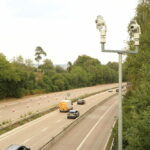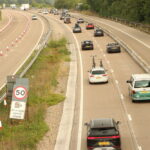
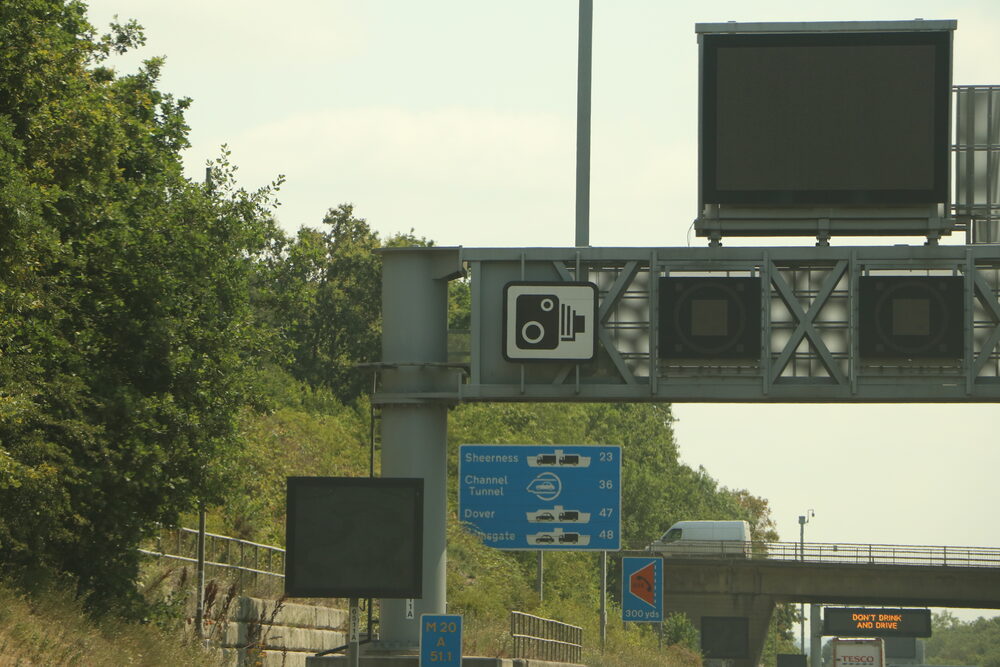

- In November 2026 the Home Office revoked type approval for the variable speed camera system on England’s smart motorways — 154 cameras across 22 police force areas.
- The same cameras had already wrongly activated 2,650 times between 2021 and 2025, and more than 36,000 speeding cases were cancelled.
- None of it would have come to light without one Driver’s dashcam — and what National Highways did with that footage is the real story.
Somewhere on the M5, a Driver passed under a gantry with a dashcam running.
The speed limit displayed on the sign overhead was one figure, but the Notice of Intended Prosecution that later arrived alleged a different one. The footage proved it.
That clip reached Avon and Somerset Police, who alerted National Highways on 25 January 2025.
By November 2026, the Home Office had withdrawn its approval from the entire camera system — all 154 cameras.
What happened in between should worry anyone who has ever been flashed under a gantry.
The Fault Nobody Was Looking For
The problem lay in how the cameras talked to the variable speed limit signs. When a limit changed quickly, the camera could carry on enforcing the old one — so a Driver obeying the number on the gantry could still be recorded as speeding.
National Highways eventually admitted to 2,650 wrongful activations between 2021 and 2025, across 154 cameras in 22 police force areas. Police forces went on to cancel more than 36,000 speeding cases as a precaution.
The official word for all this was an “anomaly”.
And according to the independent review published in November 2026, it might never have been detected at all without that one Driver’s footage.
Told in January, Acted in October
The review, led by Tracy Westall for the Department for Transport, set out the timeline — and it does not flatter National Highways.
The alert arrived in January 2025. Chances to escalate it were then missed, and the organisation’s crisis process was not activated until October 2025.
It was 17 October 2025 before National Highways told its camera supplier to stop passing variable speed data to police forces. For almost nine months, data from cameras already under question kept flowing to the people issuing the tickets.
Parliament and the public were not told until December 2025.
The review found gaps in governance, risk management and basic ownership of the system. The two pieces of technology involved had not even both been classed as critical.
Then Came the Second Fault
While the first problem was being investigated, National Highways and the Home Office tested the cameras together — and found another potential issue with how they activate.
Officially, the odds are tiny. National Highways puts the probability of the circumstances arising at no more than 0.1 per cent, and says there is no real-world evidence that enforcement was affected.
Yet the Home Office concluded the problems could not be fixed to its satisfaction within a reasonable time, and revoked the system’s type approval.
Type approval is what allows a camera’s data to be readily accepted as evidence in Court. Without it, National Highways has stopped using the cameras for enforcement and is ending its contract with the supplier, the American firm Verra Mobility.
Roads minister Justin Madders put it in six words: “We can’t take chances with this.”
Don’t miss a story: join the free DriveProtect newsletter — straight-talking updates for British Motorists.
What Is Still Watching the Motorway
None of this makes a smart motorway a free-for-all. The variable limits on the gantries still apply, and the minister said enforcement continues through mobile cameras and marked and unmarked police patrols.
National Highways has added traffic officer patrols at the affected sites, and says existing CCTV and ANPR cameras are being used to monitor compliance and identify offenders.
The gantry cameras themselves are not expected to be fully fixed until some time in 2027.
Why This Matters to Every Driver With a NIP
The lesson reaches well beyond smart motorways. For years these cameras were treated as beyond question, and a Driver who received a NIP from one had little reason to doubt it.
It took a single Motorist with independent evidence, and the willingness to challenge the paperwork, to show the machine was wrong. Thousands of others had no way of knowing.
Both faults trace back to a camera upgrade that began in 2019, and the Government says redress will continue for affected Drivers as they are identified. If you were prosecuted by a variable speed camera and the limit on your paperwork never matched what you saw on the gantry, that is worth raising.
A camera reading is evidence, and evidence can be tested — the signage, the timings, the equipment and the paperwork all have to be right.
DriveProtect™ Members don’t have to work that out alone. From the day a NIP arrives, Members get direct access to a specialist Speeding Solicitor who reviews their case and advises them exactly what to respond, for a fraction of the normal cost of legal help.
The war on the British Motorist, straight to your inbox
Join the free newsletter — straight-talking updates on speed cameras, enforcement, and your rights as a Driver.
Join the NewsletterGot a NIP or points on your licence right now? See how DriveProtect Membership works — a specialist Speeding Solicitor in your corner from £25/month.